Proxy Server Beginner Guide
If you’ve ever wondered what is a proxy server, the short answer is simple: it’s an intermediary server that acts as a bridge between your device and the internet. Instead of connecting directly to the destination website, your traffic passes through this gateway first. As a result, the website sees the proxy's IP address instead of yours, which helps mask your identity and adds a basic layer of data protection.
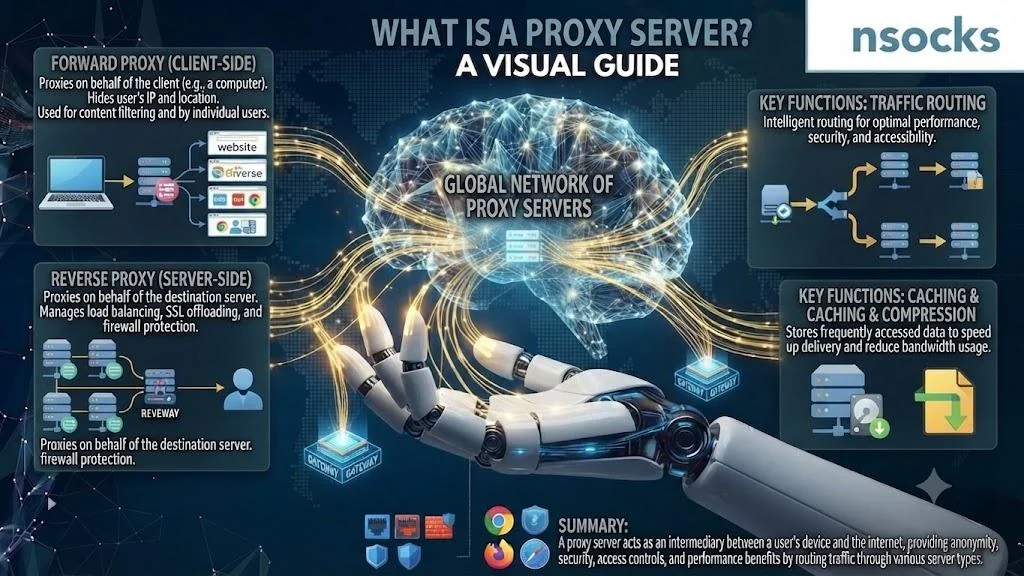
What is a proxy server in simple terms
The easiest way to understand the proxy server meaning is through a simple example. Imagine you want to buy a rare item from a store, but you don’t want to reveal your identity. You hire a personal assistant: they go to the store, buy the item, and bring it back to you.
💡 Practical tip: Using these intermediaries can help you collect data safely, balance traffic, and manage corporate networks while reducing the risk of your primary IP address being blocked.
How does a proxy server work
To understand the technical details of what is a proxy server, let’s look at the standard sequence of events involved in processing a network request:
- You run a script or enter a website address in your browser.
- The request is sent to a server instead of going directly to the website.
- The server processes the request, masks your IP address, and routes the traffic to the requested resource.
- The website treats the request as if it came from the server itself and sends a response back.
- The server receives the data and forwards it to your device.
For anyone who needs a brief proxy explained, it means delegating your traffic to a trusted intermediary that handles routing and basic security tasks. That’s why it’s important to understand what is a proxy server so you can use it with confidence.
Key parts: IP, port, and authentication
Every connection to a server is based on three basic elements. The first is the IP address. This is a unique numerical identifier for a server on the network that hides your real address. The second is the port, which connects to the server and allows a specific type of traffic to pass through. Only then does authentication take place via a username and password to access the server. This ensures that access to third-party resources occurs through a secure connection.
Main types of proxies
To fully understand the proxy server meaning, it helps to know how different types of proxies are categorized.
| Protocol type | What it is | Suitable for |
| SOCKS5 proxy | A universal protocol that can transmit almost any type of traffic, including streaming and P2P traffic, without altering packet headers or payload data. | Advanced software, large-scale data transfers, online games. |
| HTTPS | A server designed for web traffic, browsers, and web data collection. | Browser automation, SEO monitoring. |
Now you understand how the main types of proxies work and why they are used.
Residential vs datacenter vs mobile proxies
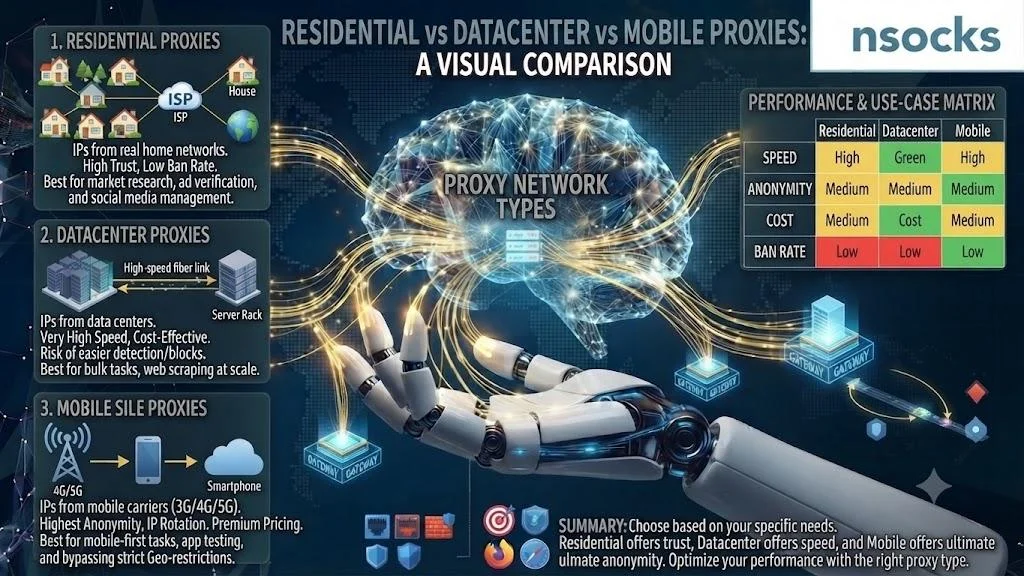
Another important part of understanding what is a proxy server is knowing where the IP address comes from.
| Category | Description | Benefits |
|---|---|---|
| Mobile | IP addresses assigned by mobile carriers. | High trust level and a lower risk of blocks. |
| Residential proxies | IP addresses assigned to real home users by internet service providers. | Strong trust signals from websites. |
| Datacenter proxies | IP addresses generated in cloud data centers. | Low cost, stable performance, and high speed. |
This information helps you determine which type of server best fits your needs.
Why would you use a proxy
Businesses and professionals often need reliable tools for everyday online tasks. The most common use cases include:
- ✅ automated data collection, which helps track competitors’ prices and reviews while reducing the risk of your IP address being blocked;
- ✅ geo-targeting, which allows you to test how localized content or ads appear to users in other countries;
- ✅ cybersecurity, as proxies can help filter malicious traffic;
- ✅ brand protection, which helps detect and prevent misuse of your intellectual property;
- ✅ load balancing, where traffic is distributed across multiple servers;
- ✅ SEO monitoring, which allows you to check website rankings across different cities and regions;
- ✅ social media management, which makes it easier to manage multiple brand accounts.
Now you know the answer to how does a proxy work and why proxies are useful.
Proxy vs VPN in one minute
Both tools can hide your IP address, but they work differently.
| Characteristic | Server | VPN |
|---|---|---|
| Speed | Usually higher | May be slower because of encryption overhead |
| Best use case | Specific business tasks | Everyday browsing and privacy |
| Connection level | Application level | Operating system level |
This is the main difference between servers and VPNs in terms of how they work.
Are proxies legal and safe
In the U.S., servers themselves are legal to use, but they must be used for lawful purposes. The main rule is simple: do not use proxies for fraud, unauthorized access, data theft, or any activity that violates federal law, state law, or the terms of the websites and services you access.
Proxy limitations to know
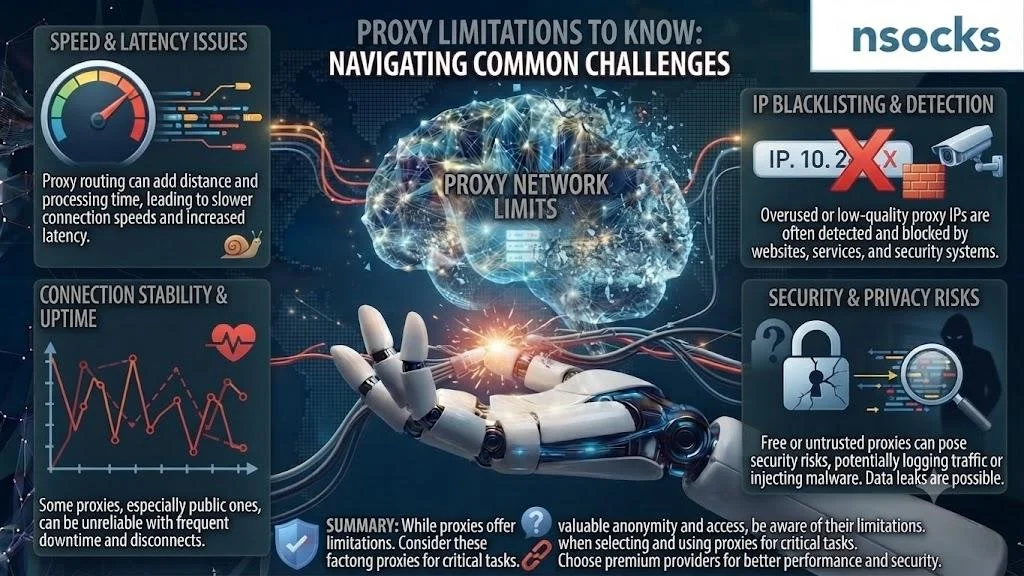
Even powerful tools have limitations:
- ❌ free public lists, which may expose your data or provide unstable connections;
- ❌ a mismatch between the type and its intended use, which can quickly lead to blocks;
- 💡 always use private, commercial proxy solutions with authentication.
Now you understand another part of the proxy server meaning: proxies can be useful, but they must be chosen carefully and matched to the right task.
How to choose your first proxy
Now that you know what is a proxy server, it’s time to choose your first proxy:
- Determine your goal. For speed, choose datacenter proxies. For higher trust signals, choose residential proxies.
- Check the geographic coverage.
- Evaluate the available protocols and make sure SOCKS5 is supported if your use case requires it.
- Run a trial before committing to a plan.
If you’re ready to put your knowledge into practice and learn how proxies work in real-world business scenarios, choose NSOCKS.
Frequently asked questions
Below are answers to common questions about this topic.
What is a proxy server used for?
In a business setting, servers are used for accessing region-specific content, collecting public web data, SEO monitoring, improving internal network security, and managing multiple corporate accounts.
Is a proxy server the same as a VPN?
No. A VPN encrypts all traffic on a device, while a proxy usually works at the application level and redirects only traffic from a specific app or browser.
Are proxy servers legal to use?
Yes, proxy servers are legal to use in the U.S. and many other countries, as long as they are used for lawful purposes.
Which proxy type should a beginner choose?
If you’re just getting started with automation or public web data collection, residential proxies are often a good starting point.
Does a proxy server hide my IP address?
Yes, a server can mask your original IP address by routing traffic through its own IP address, but it does not guarantee complete anonymity.